
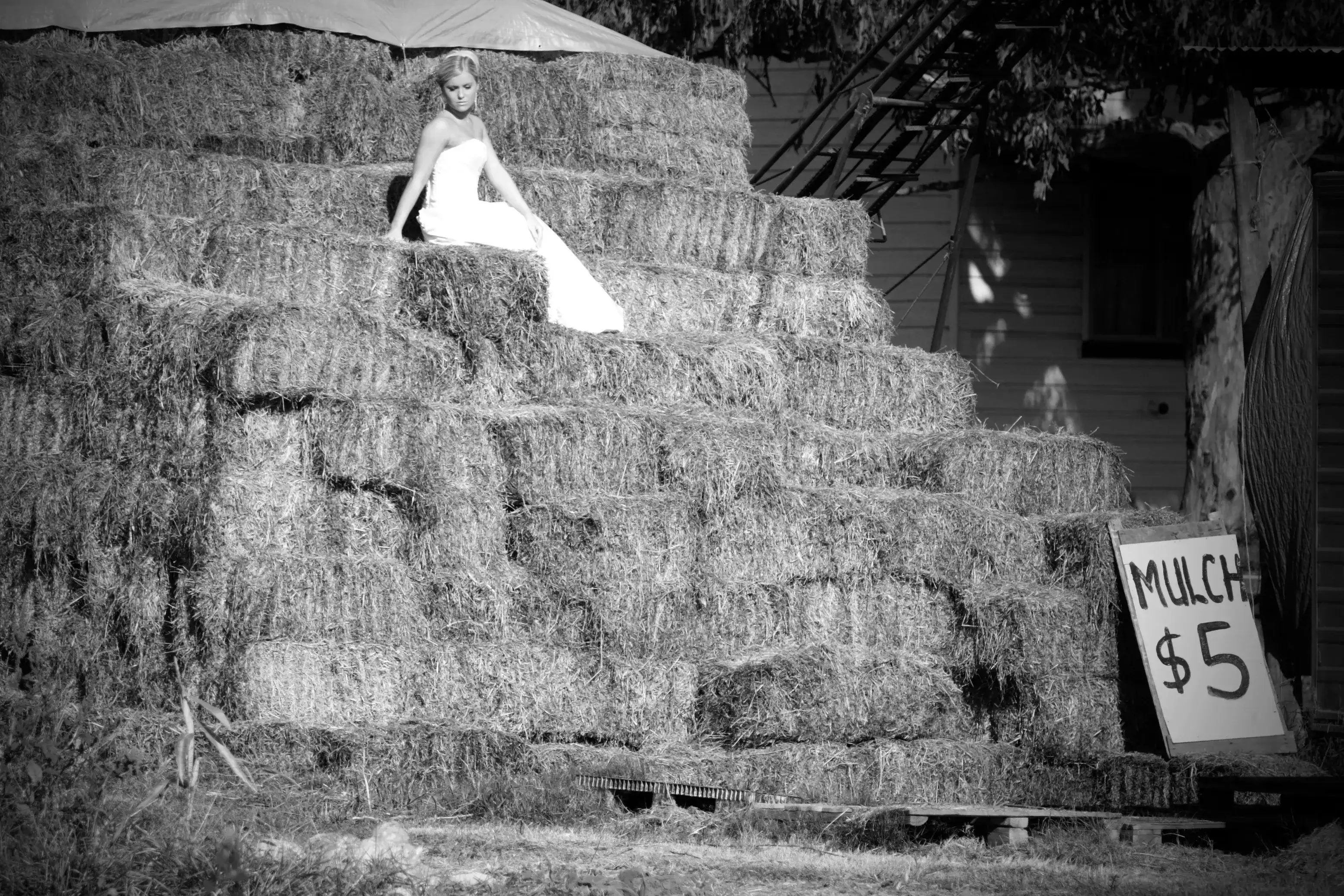
What a Hunter Valley Vineyard Wedding Does to Your Makeup
Wedding Diaries Editor’s Choice, four years running
 2023
2023 2024
2024 2025
2025 2026
2026
The short answer
A Hunter Valley vineyard wedding puts makeup through heat, hard overhead light, dust and a long outdoor day. That changes the base, not the look: lighter layers built to last, airbrush rather than heavy coverage, and a timeline set by the drive between the cottage and the ceremony rather than by the ceremony alone.
Vineyard weddings photograph better than almost anything else in New South Wales, and they are harder on makeup than almost anything else in New South Wales. Both of those things are true at once, and after eighteen years of Hunter Valley wedding mornings I have stopped pretending otherwise.
If you are choosing a makeup artist for a Hunter Valley wedding, the useful question is not what look they can build. It is what they change when the conditions are this specific. What I change is below; what a booking includes is on the makeup artist Hunter Valley page.
The heat, and what it does to a base
A February wedding in Pokolbin can sit in the mid thirties with no meaningful shade between the ceremony lawn and the cellar door. Heat does two things to makeup: it thins the oils already in your skin, and it makes you produce more of them.
The instinct is to go heavier. That is exactly backwards. A thick base has more to slide, and when it goes it goes in patches around the nose and the chin where the photographs are.
So in the valley I go lighter and build in thin layers, which takes longer and lasts longer. Airbrush earns its keep here more than anywhere I work, because it sits in a fine layer on the surface of the skin rather than being pressed into it, and a fine layer has less to move. It is included in the $320 rather than sold as an upgrade, which matters when the answer to “should we?” ought to be about your skin and not about your budget. The finish itself is a separate decision from the method, and the bridal makeup styles I build all work in the valley as long as the base underneath is right.
The set is targeted rather than total. Forehead, nose, chin and the inner corners of the eyes get locked down. Cheeks stay alive, because a fully matte face in that light reads as flat and slightly grey in photographs.
The light in a vineyard is not the light in a getting-ready room
You get ready in a cottage with the curtains open and soft indirect light, then walk out into open sun bouncing off gravel, vines and a white marquee. That is a very large jump.
Overhead sun deepens every shadow on a face, which means the contouring that looked correct in the mirror can read as heavy on the lawn at one o’clock. It also flattens colour, so a blush that felt right inside disappears entirely outside.
I build for where you will actually be standing when the ceremony happens, not for the room I am standing in. If your ceremony is at 3pm on an open lawn and your photographs are at golden hour among the rows, those are two different lighting situations in one afternoon and the makeup has to work in both. Tell me the ceremony time at the trial. It changes what I do.
Dust, wind and a long walk between the rows
Vine rows are dusty and the valley moves air around more than people expect. Two practical consequences.
Lashes matter more here. Mascara plus wind plus a photographer walking you a hundred metres into the rows is how you end up with grey shadows under the eyes by four o’clock. Individual lashes hold their shape through that and do not need touching. They come with the booking rather than as an extra.
And loose hair takes a beating. This is a hair decision rather than a makeup one, but it lands on the same morning, so it is worth saying: an exposed vineyard is not the place for a soft down style unless your hair genuinely holds. A worn-down look that is secured properly at the crown survives the walk. One that is only styled does not.
The getting-ready room is usually a cottage, and cottages have terrible light
Most valley accommodation is beautiful and none of it is built for this. Low ceilings, warm bulbs, small windows, and often a bathroom that is the only bright room in the house.
I bring my own lighting, which sounds obvious and is not universal. What I need from you is a table near a window and a power point, and I will make the rest work. If the cottage has a verandah, that is usually the best room in the place.
Your timeline is set by the drive, not by the ceremony
This is the single biggest difference between a Hunter Valley wedding morning and a Newcastle one, and it is the one that catches people out.
You are frequently getting ready fifteen to twenty-five minutes from where the ceremony happens. There may be a shuttle. There may be a gravel road. There is almost always a photographer who wants twenty minutes with you before you leave.
So the finish time is not “before the ceremony”. It is before the cars, minus the photographer, minus getting into the dress, minus the group photograph on the verandah that nobody planned for and everybody wants. I work that backwards from the ceremony time and then add a buffer, which is why my arrival time can look early on paper.
There is a fuller version of this on the wedding morning timeline, and if you are still choosing where to hold the day, my complete guide to Hunter Valley wedding venues covers the estates I work at most.
What it costs to get me to the valley
Bride hair and makeup is $320 with lashes and airbrushing included, bridesmaids are $300, and there is a minimum call-out of three people for hair and makeup.
The Hunter Valley sits outside the no-travel-fee zone, so a fee of $150 to $200 applies depending on exactly where you are, and it is quoted before you book rather than added afterwards. A bride and two bridesmaids for hair and makeup works out at around $1,070 in the valley against $920 for the same booking in Newcastle. Everything else is on the pricing page.
I take one wedding a day, which in the valley matters more than it does anywhere else, because there is no version of a vineyard morning where rushing improves it.
If you are planning a Hunter Valley wedding, send me your date and your venue and I will tell you straight away whether I am free. More on what I do across the Hunter Valley if you want the detail first.
Limited Dates Available
Book Your Hunter Valley Bridal Beauty
I will personally reply to every enquiry within 24 hours. Currently booking 2026 and 2027, don’t miss your date.
Or call me directly: 0402 905 765
Hunter Valley Vineyard Weddings, Questions Brides Ask
Will my makeup last through a hot Hunter Valley afternoon?
Yes, if it is built for the day rather than for the trial photograph. In the valley I go lighter on the base and build in thin layers, use airbrush foundation because it sits on the skin rather than soaking in, and set the areas that actually move. A February wedding and a July wedding get different products, not a different look.
What is the travel fee to the Hunter Valley?
A travel fee of $150 to $200 applies depending on where in the valley you are getting ready, quoted before you book. That puts a bride and two bridesmaids for hair and makeup at around $1,070 rather than the $920 the same booking costs inside Newcastle, which is the no-fee zone.
How early do you arrive for a vineyard wedding?
Earlier than most brides expect, because the valley adds a drive that a Newcastle wedding does not have. Cottage accommodation is often fifteen to twenty-five minutes from the ceremony lawn, and that transfer has to sit inside the timeline rather than on top of it. I would rather finish half an hour early and have you sitting down than run the last face against the clock.
Do you work at the vineyard venues around Pokolbin and Rothbury?
Regularly. Pokolbin, Rothbury, Lovedale, Broke and Cessnock are all part of my normal run, and I have worked mornings at most of the estates and cellar doors that host weddings there. If your venue is not one I have been to, tell me at the trial and I will ask you the handful of questions that change what I bring.